Cross-contamination is one of the most serious risks associated with asbestos. It happens when asbestos fibers spread from their original location into clean areas of a building or surrounding environment. Once this occurs, the problem becomes far more complex, expensive, and dangerous. Preventing cross-contamination is one of the primary goals of professional asbestos abatement.
Asbestos fibers are microscopic. They cannot be seen, smelled, or felt. When disturbed, they travel easily through air currents, on clothing, tools, and equipment. Without strict controls, a small asbestos issue can quickly turn into a building-wide contamination problem.
In cities like Edmonton, where many residential, commercial, and industrial buildings were constructed during periods of heavy asbestos use, understanding how asbestos abatement prevents cross-contamination is critical for protecting health, property, and compliance.
CROSS-CONTAMINATION IS MORE DANGEROUS THAN A SINGLE SOURCE
A contained asbestos material poses limited risk if left undisturbed. Cross-contamination changes that completely. When fibers spread into clean areas, exposure risk multiplies. Occupants may breathe fibers unknowingly for long periods. Furniture, carpets, and HVAC systems can become contaminated.
Cleaning up widespread contamination is far more difficult than addressing a single source. Professional asbestos abatement focuses on stopping fibers at the source before they spread.
CONTAINMENT IS THE FIRST LINE OF DEFENSE
Containment is the most important method used to prevent cross-contamination. During asbestos abatement, work areas are sealed off using heavy-duty plastic barriers. Walls, doors, vents, and openings are enclosed completely.
These containment zones isolate asbestos materials from the rest of the building. Without containment, air movement carries fibers into adjacent rooms almost immediately. Proper containment keeps hazardous work separate from occupied spaces.
NEGATIVE AIR PRESSURE CONTROLS FIBER MOVEMENT
Negative air pressure systems are critical for preventing fiber escape. Specialized machines pull air into the containment area and filter it before releasing it outside the space.
This creates airflow that moves inward, not outward. As a result, asbestos fibers cannot drift into clean areas. Negative air pressure acts as a constant barrier against contamination spread.
HEPA FILTRATION CAPTURES MICROSCOPIC FIBERS
Asbestos fibers are extremely small. Standard filters cannot capture them. Professional abatement uses HEPA filtration designed to trap microscopic particles.
Air passing through negative air machines and vacuums gets filtered before release. This prevents fibers from circulating through the building. HEPA filtration plays a major role in maintaining clean air outside containment zones.
CONTROLLED REMOVAL LIMITS FIBER RELEASE
How materials are removed matters just as much as where. Professional asbestos abatement uses controlled techniques to minimize fiber release.
Materials are often kept wet to reduce airborne particles. Cutting and breaking are done carefully. Aggressive removal creates dust clouds that spread fibers rapidly. Controlled removal keeps fibers contained and manageable. This significantly reduces cross-contamination risk.
WORKER DECONTAMINATION PREVENTS FIBER TRANSFER
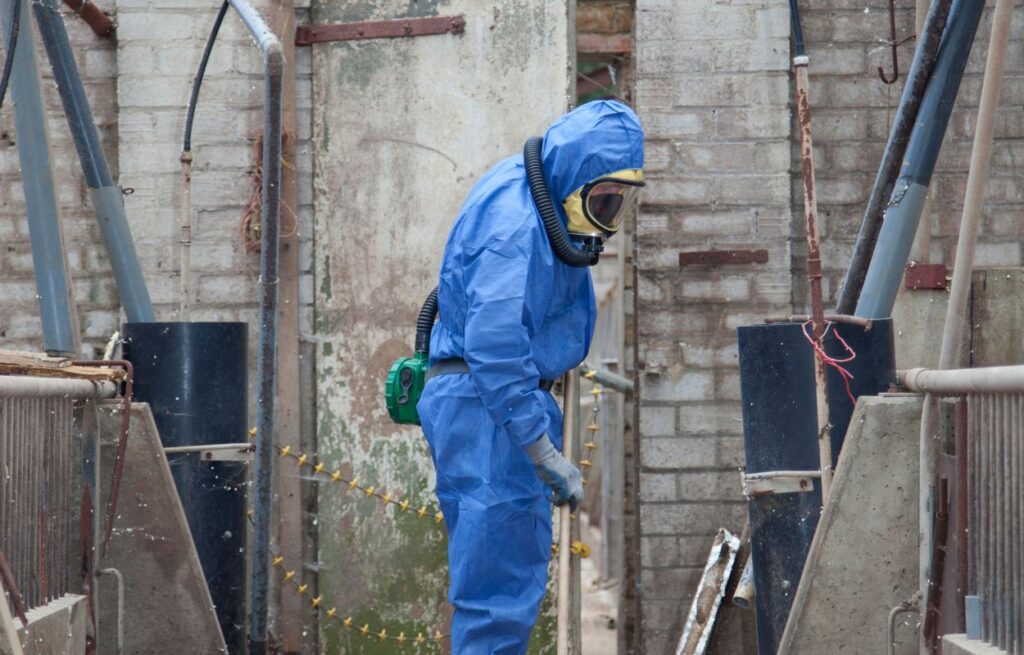
Workers can easily spread asbestos fibers if proper procedures are not followed. Protective clothing, gloves, and respirators are worn inside containment zones.
Before leaving the work area, workers pass through decontamination units. These units remove fibers from clothing and equipment. This prevents asbestos from being carried into clean areas on workers themselves. Decontamination is essential for stopping hidden spread.
TOOLS AND EQUIPMENT STAY INSIDE CONTAINMENT
Tools used during abatement can collect asbestos fibers. Professional procedures keep these tools inside the containment area.
Equipment is cleaned or disposed of before leaving the space. This prevents fibers from traveling on tools into other parts of the building. Tool control is a key part of contamination prevention.
HVAC SYSTEMS ARE SEALED AND PROTECTED
Heating and ventilation systems can spread asbestos fibers quickly. If fibers enter ductwork, contamination can affect the entire building.
Asbestos abatement includes sealing vents and isolating HVAC systems near work zones. This prevents fibers from being pulled into airflow systems. Protecting HVAC systems protects the entire indoor environment.
WASTE HANDLING PREVENTS SECONDARY CONTAMINATION
Asbestos waste must be handled carefully to avoid spreading fibers. Materials are sealed in approved containers and labeled properly.
Waste is removed following strict procedures that limit fiber release. Improper waste handling is a common source of cross-contamination. Professional abatement ensures waste leaves the site safely.
AIR MONITORING CONFIRMS CONTAINMENT EFFECTIVENESS
Cross-contamination cannot be judged by appearance alone. Air monitoring tests fiber levels outside containment zones.
These tests confirm that fibers have not spread. If contamination is detected, corrective action happens immediately. Monitoring provides measurable proof that controls are working.
CLEANING AND CLEARANCE VERIFY SAFE CONDITIONS
After abatement, thorough cleaning takes place inside containment zones. Surfaces are wiped and vacuumed using HEPA equipment.
Clearance testing follows to confirm fiber levels meet safety standards. Only after clearance is achieved are containment barriers removed. This final step ensures asbestos has not escaped into clean areas.
PREVENTING CROSS-CONTAMINATION PROTECTS REUSE AND RENOVATION PLANS
Cross-contamination does more than affect air quality. It can render building materials unusable.
Clean materials intended for reuse or renovation become hazardous if contaminated. Asbestos abatement protects surrounding materials by keeping fibers contained. This supports safer renovations and deconstruction projects.
COMMERCIAL AND MULTI-UNIT BUILDINGS FACE HIGHER RISK
In multi-unit buildings, cross-contamination affects many occupants. Shared hallways, ventilation, and utilities increase spread potential.
Professional asbestos abatement uses enhanced containment strategies in these environments. Protecting common areas is critical for occupant safety. The stakes are higher in shared spaces.
DIY WORK GREATLY INCREASES CROSS-CONTAMINATION RISK
Untrained removal almost always leads to fiber spread. Lack of containment, improper tools, and poor waste handling allow contamination to spread quickly.
Once fibers move beyond the original area, cleanup becomes extensive and costly. Professional abatement prevents this scenario entirely. Proper procedures matter.
ASBESTOS ABATEMENT EDMONTON PROJECTS REQUIRE STRICT CONTROLS
Many Edmonton buildings contain asbestos in multiple materials. Cold climates and aging infrastructure contribute to material deterioration.
Renovations and removals increase disturbance risk. Asbestos abatement Edmonton professionals rely on understand local building conditions and regulatory requirements. Local expertise ensures containment strategies are effective.
PREVENTING CROSS-CONTAMINATION REDUCES LIABILITY
Cross-contamination increases legal and financial risk. Occupant exposure, extended closures, and remediation costs add up quickly.
Professional abatement reduces liability by following strict protocols. Documentation and testing provide proof of compliance. Risk reduction benefits property owners and contractors alike.
LONG-TERM SAFETY DEPENDS ON PROPER CONTAINMENT
Even after work is complete, improper abatement can leave lingering contamination. Fibers trapped in ducts, walls, or furnishings continue to pose risks.
Preventing cross-contamination protects long-term indoor safety. Correct procedures stop problems before they start.
WHY ASBESTOS ABATEMENT EDMONTON PROPERTY OWNERS TRUST MATTERS
Property owners want certainty that asbestos hazards are fully controlled. Asbestos abatement Edmonton services focus on prevention, not just removal.
Their goal is to keep contamination contained from start to finish. Trust comes from results that last.
FINAL THOUGHTS
Cross-contamination is one of the greatest dangers associated with asbestos. Once fibers spread, risks and costs multiply. Professional asbestos abatement prevents cross-contamination through containment, negative air pressure, controlled removal, decontamination, and verification testing.
These measures keep asbestos fibers from spreading beyond their source and protect indoor environments. In Edmonton buildings, where asbestos remains common, proper abatement is essential for safety and compliance. Preventing contamination is always better than cleaning it up later. Asbestos abatement ensures that hazardous fibers stay contained and controlled at every step.